Key takeaways
- Adaptive predictive artificial intelligence forecasts future operational events and retrains itself as live data changes, so its guidance stays accurate over time.
- In 2026 only 21% of organizations reported having proper governance for autonomous AI agents, even though 75% planned to deploy them within two years (Deloitte).
- Prediction belongs in front of a human, not in place of one: a forecast should propose an action and wait for approval before anything executes.
- Ungoverned predictive automation drifts silently, so monitoring, clear ownership, and approval gates matter more than raw model accuracy.
Adaptive predictive artificial intelligence is software that forecasts what is about to happen in your operation, then updates its own understanding as new data arrives. The "adaptive" part is what sets it apart: the model notices when reality drifts away from its assumptions and relearns, rather than quietly growing stale. For operations leaders, that means forecasts that track current conditions instead of last quarter's.
This matters because most operations teams already drown in coordination work that could be anticipated. A good predictive layer sees the demand spike, the late shipment, or the approval backlog forming before it lands on someone's desk. The hard questions are how adaptation actually works, where it helps, and how much authority to hand it. This article walks through all of that in plain terms.
What Adaptive Predictive Artificial Intelligence Means in Plain Terms
Adaptive predictive artificial intelligence combines two ideas. Prediction estimates a future outcome from historical and live data. Adaptation means the model watches its own accuracy and retrains when the world changes, instead of running unchanged until someone rebuilds it by hand.
Think of a standard forecast as a photograph and an adaptive one as a live video feed. A static demand model trained on last year's sales will slowly fall out of step as buying habits move. An adaptive system compares its predictions against what actually happened, detects the gap, and adjusts its weighting toward recent signals. The payoff shows up in operations: in 2026, McKinsey reported that AI-driven forecasting can cut supply chain errors by 20 to 50 percent (McKinsey & Company, 2025). That range reflects how much better planning gets when the model keeps current.
The word "artificial intelligence" can sound grander than the reality. Most operational prediction rests on well-understood statistical and machine learning methods. What makes a system genuinely adaptive is the feedback loop around the model, not a single clever algorithm.
How Predictive Models Adapt as Operational Data Changes
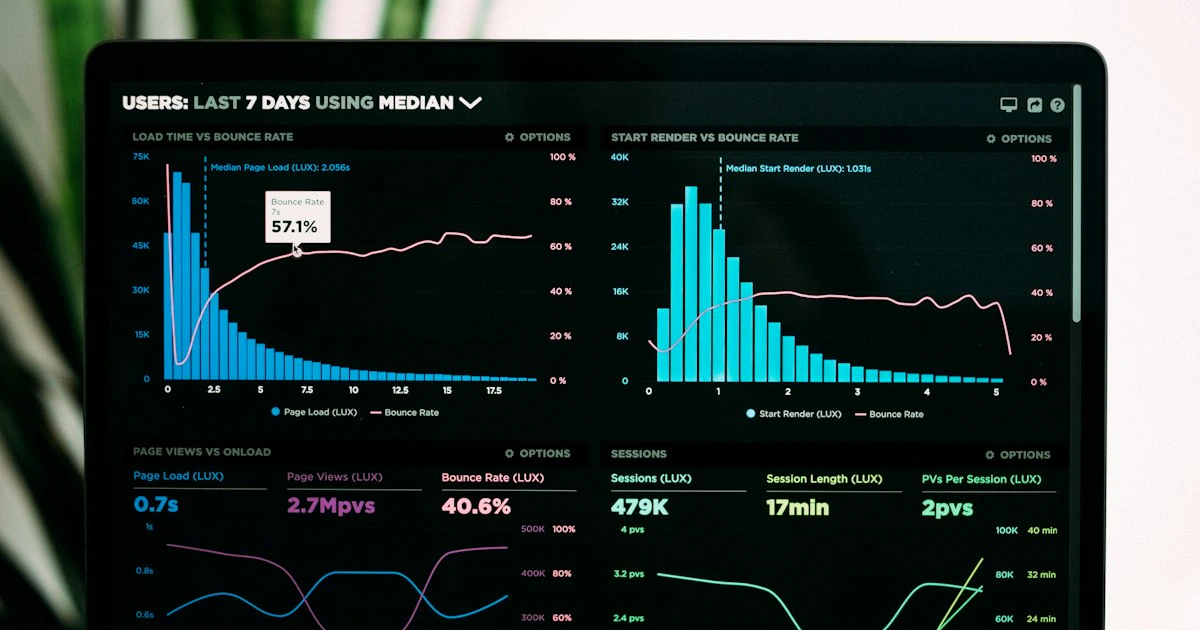
Models adapt through a continuous loop: predict, compare, learn, repeat. The system logs each forecast, waits for the real outcome, measures the error, and feeds that error back so future predictions shift toward what is actually happening. When the error grows past a threshold, it signals that the underlying patterns have moved.
That signal has a name. Model drift happens when the relationships a model learned no longer match current data, and it is common enough to be a real operational risk. A new supplier, a pricing change, or a seasonal swing can all break old assumptions. An adaptive setup treats drift as expected and plans for it, rather than discovering it months later when forecasts have already gone wrong.
Adaptation is not free, though. Retraining on recent data can overfit to noise, chasing a one-week blip as if it were a lasting trend. Good systems balance responsiveness against stability, and they expose that trade-off to the people running them. The quality of the data feeding the model matters just as much as the algorithm, since clean, connected inputs are what let adaptation work at all.

Use Cases: Demand Shifts, Exception Forecasting, and Bottleneck Prediction
The clearest wins come in three areas: anticipating demand shifts, forecasting exceptions, and predicting bottlenecks before they stall work. Each one replaces reactive scrambling with a heads-up the team can act on. The common thread is lead time: a prediction is only useful if it arrives early enough to change the outcome.
Demand shifts are the classic case. An adaptive model watching orders, web traffic, and seasonality can flag a surge while there is still time to adjust inventory or staffing. Exception forecasting goes a step further by predicting which orders, invoices, or shipments are likely to go wrong, so a team can intervene before a customer notices. Bottleneck prediction looks inward, spotting where a queue is building. If your approvals routinely jam, pairing a forecast of the backlog with a deliberate fix for the bottleneck itself compounds the benefit.
These use cases share a requirement. Each needs data from several systems at once, because a demand signal in one tool means little without the inventory picture from another. Prediction quality depends heavily on how well those systems talk to each other.
Why Prediction Needs Human Approval Before Action
Prediction should inform a decision, not make it unsupervised. A forecast is a probability with an error bar, and treating it as a certainty is how teams end up automating a mistake at scale. Keeping a person at the approval gate preserves judgment, accountability, and the ability to catch the odd case a model has never seen.
The governance gap here is real. In 2026, Deloitte found that only 21 percent of organizations reported having proper governance in place for autonomous AI agents, even as 75 percent planned to deploy them within two years (Deloitte AI Institute, 2026). That gap between ambition and control is exactly where predictive systems cause damage. A human approval step is the cheapest insurance against it.
Human-in-the-loop design also builds trust, which determines whether people actually use the system. When a tool explains its reasoning and waits for a yes, operators learn when to trust it and when to override. We go deeper on where to draw that line in AI agents vs human approval.
Risks of Ungoverned Predictive Automation and How to Avoid Them
The main risks are silent drift, opaque decisions, and compounding errors. When predictions trigger action automatically with no monitoring or clear owner, small inaccuracies scale quietly until they surface as stockouts, missed exceptions, or eroded trust. The failure is rarely dramatic at first, which is what makes it dangerous.
Security and oversight worries track this. Across recent enterprise surveys, data privacy and security rank as the leading AI concern, with weak governance and oversight close behind. Teams sense the exposure even when they cannot yet measure it. The answer is to govern prediction, not avoid it.
Three practices do most of the work. First, monitor accuracy continuously and alert when it slips, so drift is caught in days, not quarters. Second, assign a clear owner for every automated prediction, because unowned automation is unaccountable automation. Third, keep an approval gate on any action with real cost. These habits turn prediction into a disciplined part of exception handling rather than a black box running unattended.
How KaiMesh Pairs Prediction with Human-in-the-Loop Control
KaiMesh connects your business systems into one operating picture, then layers prediction on top with a human approval step built in. Because the platform already sees data across tools, its forecasts draw on the full context rather than one siloed feed. When the system anticipates a demand shift or a forming bottleneck, it proposes an action and routes it to the right person for a decision.
That design directly answers the risks above. Nothing with real cost executes on a prediction alone, so a single bad forecast cannot cascade into automated damage. Operators see the reasoning behind each recommendation, approve or override it, and that feedback helps the models stay honest. The result is prediction that augments the team's judgment instead of replacing it.
The honest framing is that adaptive prediction is a tool, and its value depends on the governance around it. If you are weighing whether this fits your team, start small: pick one recurring coordination headache, such as a demand swing or a chronic approval jam, and run prediction with a human gate on just that workflow. Measure whether it buys you lead time and fewer surprises, then expand from what you learn.
Frequently asked questions
What is adaptive predictive artificial intelligence?
It is predictive AI that forecasts future events and continuously updates itself as new operational data arrives. Unlike a static model, it detects when patterns change and relearns, so its predictions track current conditions instead of last quarter's.
How is adaptive predictive AI different from standard predictive analytics?
Standard predictive analytics trains once and runs until someone rebuilds it. Adaptive systems monitor their own accuracy, flag drift, and retrain on recent data, which keeps forecasts reliable when demand, suppliers, or seasonality shift.
Why does predictive AI still need human approval?
A prediction is a probability, not a certainty. Keeping a person in the approval loop catches edge cases the model missed, preserves accountability, and prevents a single bad forecast from triggering costly automatic action.
What are the main risks of ungoverned predictive automation?
Model drift, unexplained decisions, and compounding errors. When predictions act automatically without monitoring or ownership, small inaccuracies scale quietly until they surface as stockouts, missed exceptions, or broken trust.